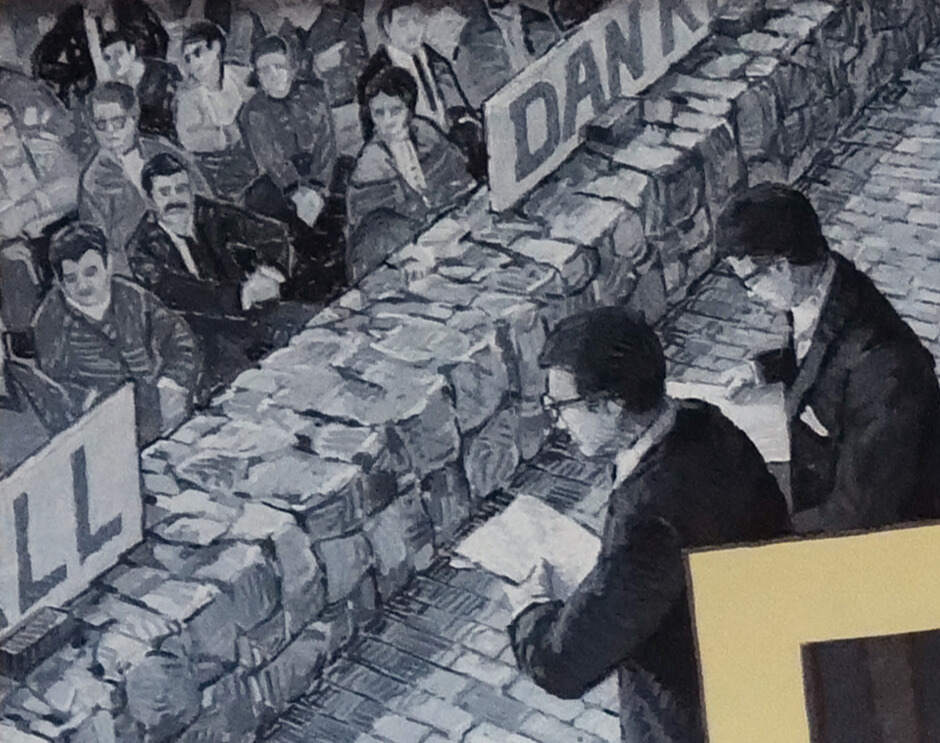
“An Act to Regulate Visiting Speakers at State Supported Colleges and Universities,” more commonly known as the Speaker Ban law, was passed on June 25, 1963. It prohibited state-sponsored colleges from hosting speeches by known members of the communist party, people known to advocate for the overthrow of the Constitution, and people who pleaded the Fifth Amendment to decline to answer questions related to communism or subversive activity.
This law has been seen as a conservative backlash to liberalism on campuses and student activism, particularly in relation to civil rights causes. The Speaker Ban was immediately unpopular on campus with administration, faculty, and students. Opponents included William Friday, the President of the UNC system, and William Aycock, the Chancellor of UNC-Chapel Hill. Many saw the law as an attack on free speech.
The first modifications to the law came in 1965 when the Southern Association of Colleges and Schools noted that the Speaker Ban put the accreditation of state schools in jeopardy. The association felt that the Speaker Ban law conflicted with their standard that the trustees of a university run their institution without outside interference. Responding to the danger of losing accreditation, the law was revised to restrict speakers based on the judgment of the trustees working under strict guidelines.
Opposition to the law continued, with student leaders desiring no limitations to speakers. Things came to a head when two controversial speakers, Frank Wilkinson and Herbert Aptheker, were invited to UNC-Chapel Hill by the University’s chapter of Students for a Democratic Society. Wilkinson was the leader of a movement to abolish the House Un-American Activities Committee and had invoked the Fifth Amendment, while Aptheker was an avowed communist. The men gave their speeches from a public sidewalk adjoining the university, while the crowd gathered on the campus side. These events, on March 2 and 9 of 1966, laid the basis for a lawsuit.
Paul Dickenson III, UNC’s student body president, and 11 other students filed a federal lawsuit challenging the Speaker Ban law in 1966 with a case known as Dickson, et al. v. Sitterson, et al. On February 19, 1968, a Federal District Court in Greensboro ruled that the Speaker Ban law was unconstitutional and violated First Amendment protections of free speech. In 2011, a monument commemorating the protests was unveiled near the spot where the Wilkinson and Aptheker speeches took place.