In colonial America, the town of Hillsborough stood as the largest European settlement between the coast and Winston-Salem. Many ideas and people moved through it, as the town stood at the crossroads of the Eno River and Indigenous trading paths. Hillsborough had a history of rebellion before the Revolutionary War. In 1771, Orange County residents vehemently petitioned colonial Governor Tyron to end predatory tax policies. The outspoken Regulators fought local government at the Battle of Alamance and lost, but discontent with British policy remained a key element of local political life.
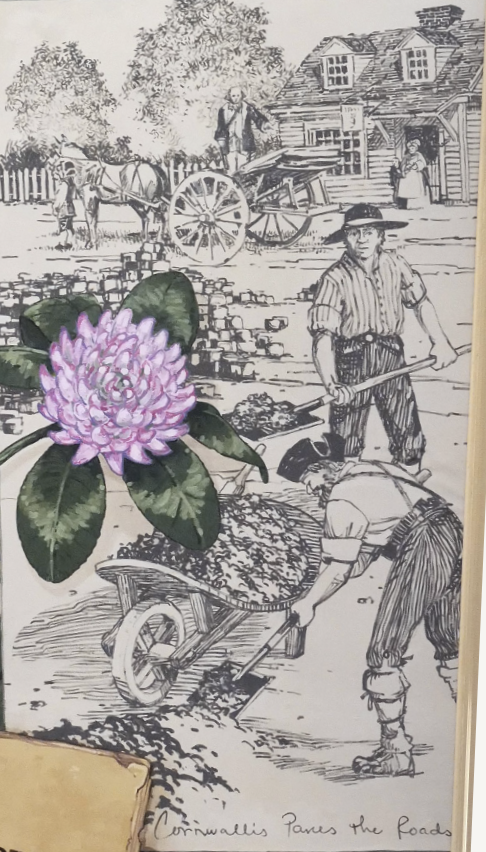
During the Revolutionary War, the town of Hillsborough housed an important figure in the British forces: General Lord Charles Cornwallis. In 1781, he retreated to Hillsborough to recuperate from skirmishes with Major General Nathanael Green and the Continental Army. Town residents overwhelmingly did not support his presence, despite the legend that during Cornwallis’s stay in Hillsborough, he ordered his soldiers to pave the town streets. An example: Martha McFarlane McGee Bell, a mill owner who sponsored Whig meetings on her property, hosted Cornwallis so that his troops would not destroy her property. After Cornwallis departed, she led an American general to ambush his camp.